Rutger Blom
-

Welcome back! In Part 1 we configured and prepared NSX to participate in a BGP EVPN control and data plane. In this part we continue with configuration of the VyOS router. Once both NSX and VyOS are configured we’ll verify that everything is working as intended. Lab Overview The lab environment for this exercise consists…
-
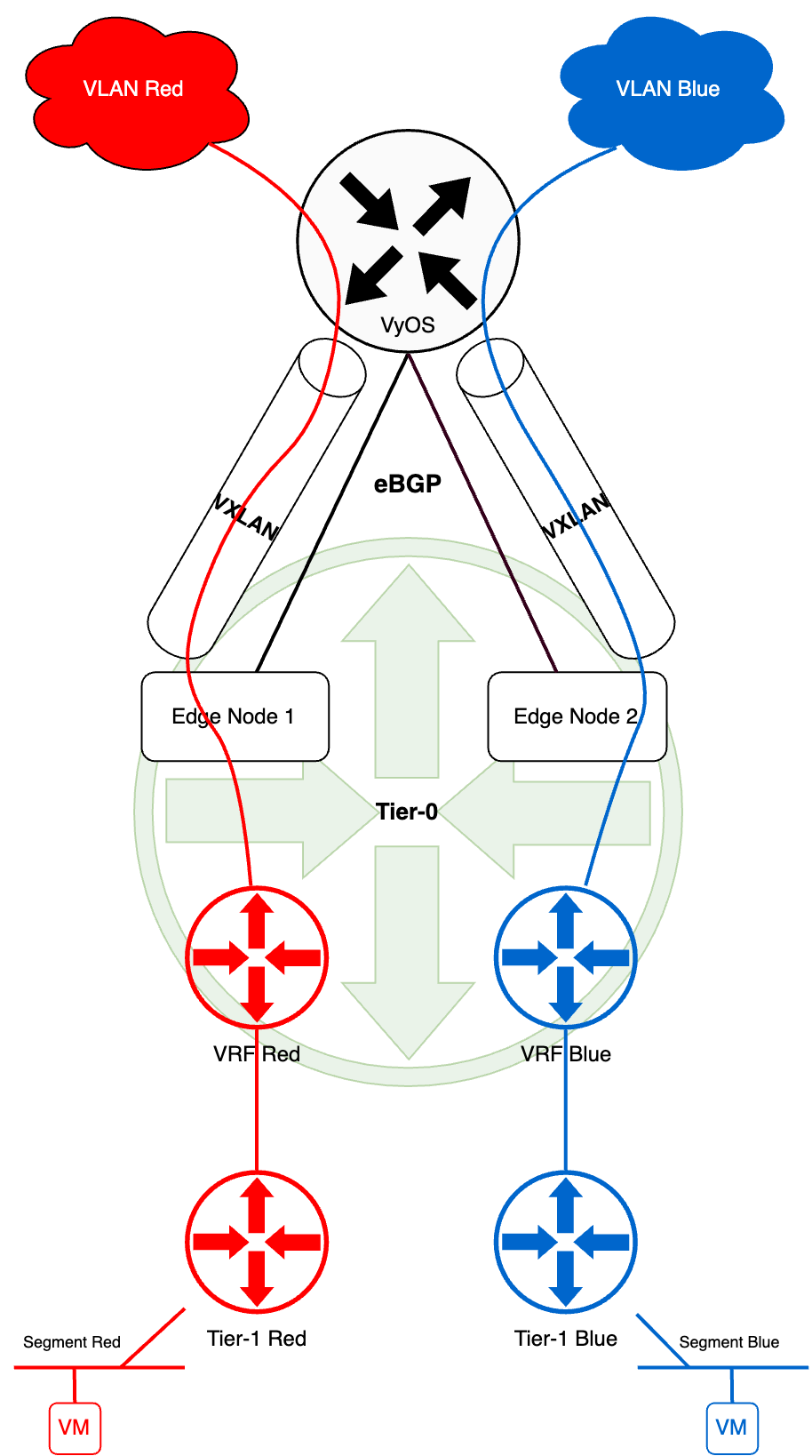
Recently I’ve been looking into setting up BGP EVPN between VMware NSX and VyOS router. I’m using VyOS quite a lot in labs and demos, often as the counterpart to a Tier-0 gateway, and wanted to find out if it was capable of a somewhat more advanced feature like BGP EVPN. It took some research…
-
One of the great benefits of the NSX Distributed Firewall (DFW) is the flexibility it offers when it comes to developing security policy models. Implementation of the application intrinsic NSX DFW always begins with looking at the business needs and then continues with development of a security policy model aligned with those needs. On the…
-
Finishing touches and testing is completed. We’re proud to announce that we’ve just released SDDC.Lab Version 5! For those of you that are not familiar with the SDDC.Lab project, it’s a collection of Ansible Playbooks that perform fully automated deployments of nested VMware Software Defined Data Center Pods including solutions like vSphere, vSAN, and NSX.…
-
Last week we released version 3 of the SDDC.Lab project. For those of you who aren’t familiar with the project, it’s a set of Ansible scripts (Playbooks) that perform automated deployments of nested VMware SDDCs. An hour after you issue the deploy command, a fully-fledged vSphere-NSX-T environment is at your disposal. Pretty cool. The diagram…
-
There are Ansible modules for configuring most of the NSX-T platform components, but for certain configuration tasks it might be quicker (or even necessary) to GET/POST/PUT/PATCH/DELETE to the NSX-T REST API directly. Now, in those situations you could use curl or Postman or any of the other REST API clients out there, but if you…
-
During some research I did for a customer on how to trigger an action based on an error event in the SDDC, I built myself a lab and ended up with a concept that seems interesting enough to write some lines about on the blog. High-Level The diagram below illustrates the “solution” at a high-level:…
-
The NSX-T Central Control Plane (CCP) is building and maintaining a central repository for some tables that make NSX-T the unique network virtualization solution it is. More specifically I’m talking about: The Global MAC address table The Global ARP table In today’s article I’ll have a closer look at these two tables. MAC Address Table…
-
Back in April I published a post about my GitHub repository containing Ansible scripts that perform automated deployment of nested vSphere/NSX-T lab environments. A lot has happened during the last 5 months and now that we’re close to making version 2 the default branch, I thought it would be a good time to give you…
-
And now something completely different. Recently, while working on a project, I had to come up with a way to automate Ubuntu Server 20.04 VM installations on vSphere. Utilizing Ubuntu’s new autoinstall method together with some Ansible code I managed to get something up and running. Decent enough to share it with you. Overview The…
-

NSX-T 3.0 comes with brand new features for logical networking in multisite environments. With NSX-T Federation the platform effectively receives a location-aware management, control, and data plane and this gives us, the implementers and architects, some very interesting new options when designing and installing NSX-T 3.0 in a multisite scenario. Although Federation affects all major…
-
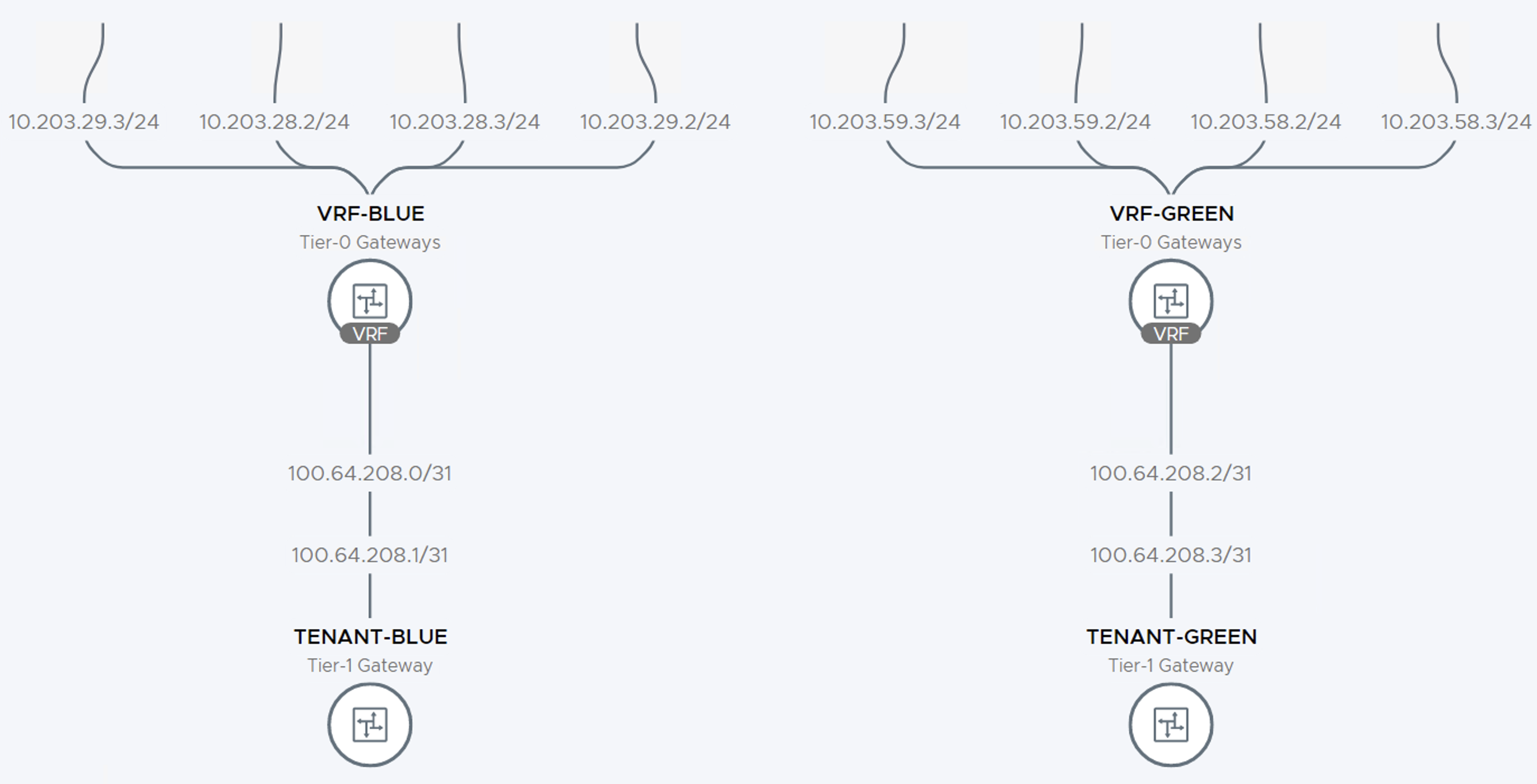
NSX-T version 3.0 brings a new routing construct to the table: VRF Lite. With VRF Lite we are able to configure per tenant data plane isolation all the way up to the physical network. Creating dedicated tenant Tier-0 Gateways for this particular use case is now a thing of the past! With 100 VRFs per…
-

Some weeks ago I introduced you to my GitHub repository containing a set of Ansible playbooks helping people deploy a highly customizable vSphere 6.7/7.0 with NSX-T 2.5/3.0 nested lab environment. As I mentioned in the “launch” post, this project is a work in progress and during the last couple of weeks I’ve been spending many…
-
It’s finally here. NSX-T 3.0 adds support for Active Directory identity sources to be used with NSX-T role-based access control. This will make life a little easier for many customers. Previously, a separate VMware Identity Manager (vIDM) virtual appliance was required to be able to map Active Directory users and groups to NSX-T roles. Now…
-
With VMware releasing new major versions of vSphere and NSX-T last week, it’s high season for nested lab deployments. My Norwegian Proact colleague Rudi Martinsen just published a great two part series on how to deploy a nested lab using vRealize Automation. My Dutch buddy at VMware Iwan Hoogendoorn is doing something very exciting with…
-
With the release of vSphere 7 comes the vSphere Distributed Switch 7.0. This latest version comes with support for NSX-T Distributed Port Groups. Now, for the first time ever it is possible to use a single vSphere Distributed Switch for both NSX-T 3.0 and vSphere 7 networking! First and foremost, this new integration enables a…
-
Welcome back! Today we continue our NSX-T Multisite adventure. Let’s begin with a short recap of what we did in part 1. We started off in an environment with a production site and a partially deployed disaster recovery site. Tasked with configuring the NSX-T 2.5.1 implementation for the new multisite environment, we took the following…