nsx-t
-
NSX-T Meets FRRouting – Part 2
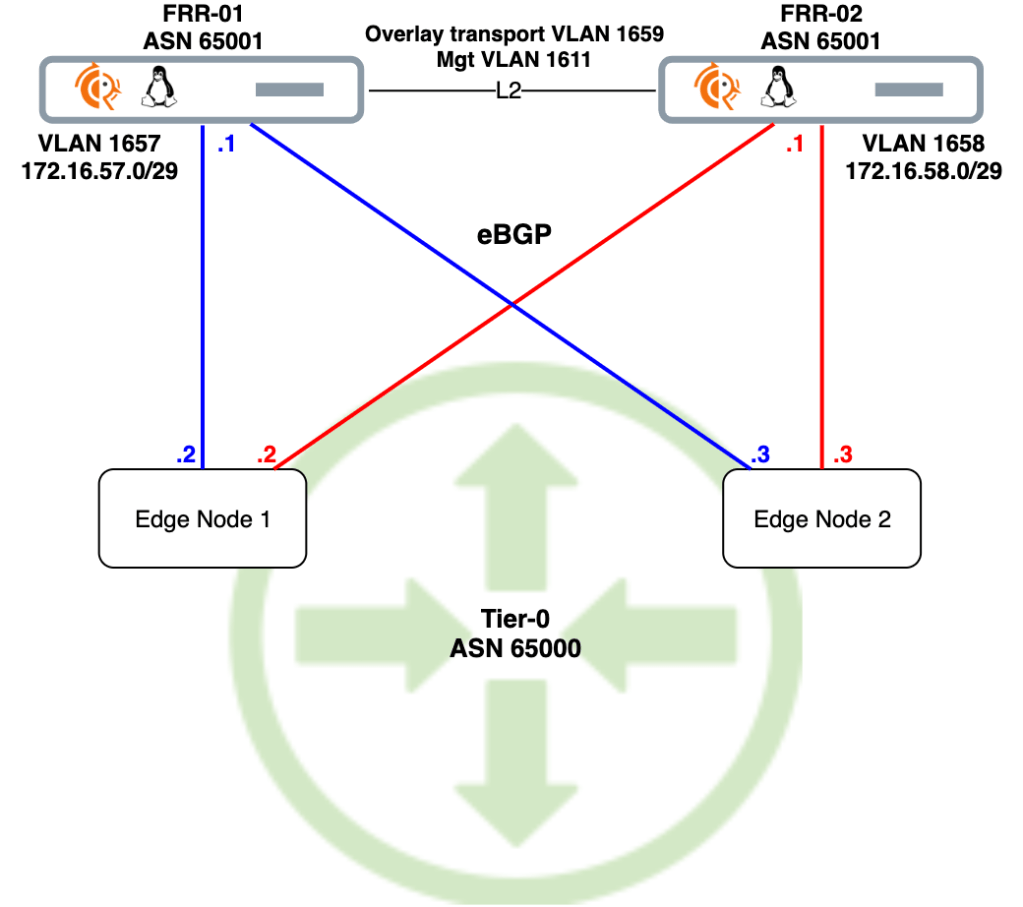
Welcome back! We’re in the process of building an NSX-T Edge – FRRouting environment. In part 1 we prepared the FRR routers by doing he following: Installed two Debian Linux servers Installed VLAN support Enabled packet forwarding Configured network interfaces… Continue reading
-
NSX-T Meets FRRouting – Part 1
Until recently I always used pfSense with the OpenBGPD package as the NSX-T Edge counterpart in my lab environment. It’s quick and easy to set up and works well enough. But pfSense is not what I typically find in a… Continue reading
-
Site-to-Site VPN Between NSX-T Tier-1 And AWS VPC
Now that I started studying for the AWS Certified Advanced Networking – Specialty I have to learn pretty much everything about AWS networking. Naturally VPN is a part of that. When it comes to AWS VPN the most common use… Continue reading

-
Kubernetes – NSX-T Lab
A while back Dumlu Timuralp published an excellent guide on integrating NSX-T 2.5 with K8s. If you haven’t read it already I strongly recommend that you have a look at it. The guide goes through every step of configuring the… Continue reading

-
NSX-T Distributed Firewall Threshold Monitoring
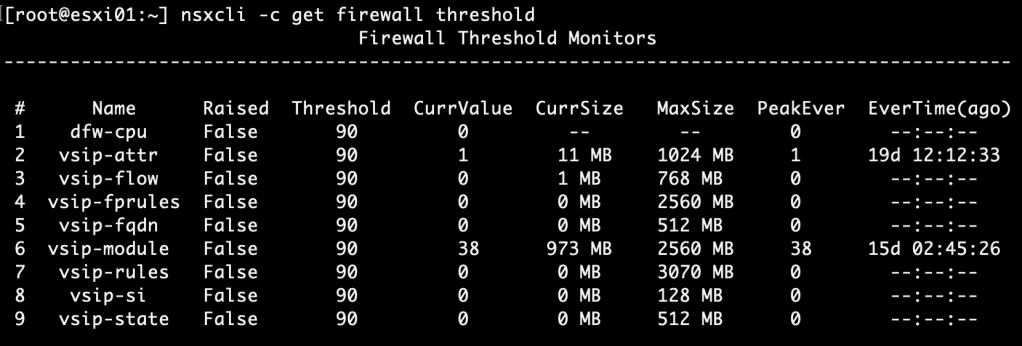
Like any other firewall the NSX-T Distributed Firewall (DFW) consumes memory and CPU. Unlike other firewalls the DFW’s resource consumption is distributed, taking place on the transport nodes where the workloads it protects reside. Memory allocation An ESXi transport node… Continue reading
-
Locking NSX-T Firewall Policies
After receiving a couple questions about the NSX-T firewall policy locking feature, I decided to write a short blog post about it. The purpose of locking a firewall policy The easy part first. As explained in the official NSX-T documentation… Continue reading

-
Tier-1 Failure Domain
With every new release of NSX-T interesting features are added to the platform. Take failure domain for example. Introduced in version 2.5, failure domain adds another layer of protection for the centralized services running on Tier-1 Gateways. It basically facilitates… Continue reading

-
Bulk Create NSX-T Segments Using A Postman Data File
Imagine this, you’ve been tasked with implementing micro-segmentation in your vSphere environment. You just deployed and configured NSX-T and the next step is to migrate VMs from their VDS port groups to N-VDS segments. You fire up the vSphere Client… Continue reading

-
Deploying NSX-T in a Stretched Cluster – Part 2
Welcome back! I’m in the process of setting up NSX-T in a stretched cluster environment. In part 1 I deployed the NSX manager cluster and configured the ESXi hosts as NSX transport nodes. The N-VDS was installed on the ESXi… Continue reading
-
Deploying NSX-T in a Stretched Cluster – Part 1
A stretched cluster architecture facilitates for higher levels of availability and things like inter-site load balancing. It’s a common multisite solution and also part of VMware’s Validated Design for SDDCs with multiple availability zones. Traditionally compute networking in an active-active… Continue reading
 rutgerblom.com